
Published October 26, 2026
Sell to a Cash Buyer or iBuyer in NH? Costs Compared (2026)

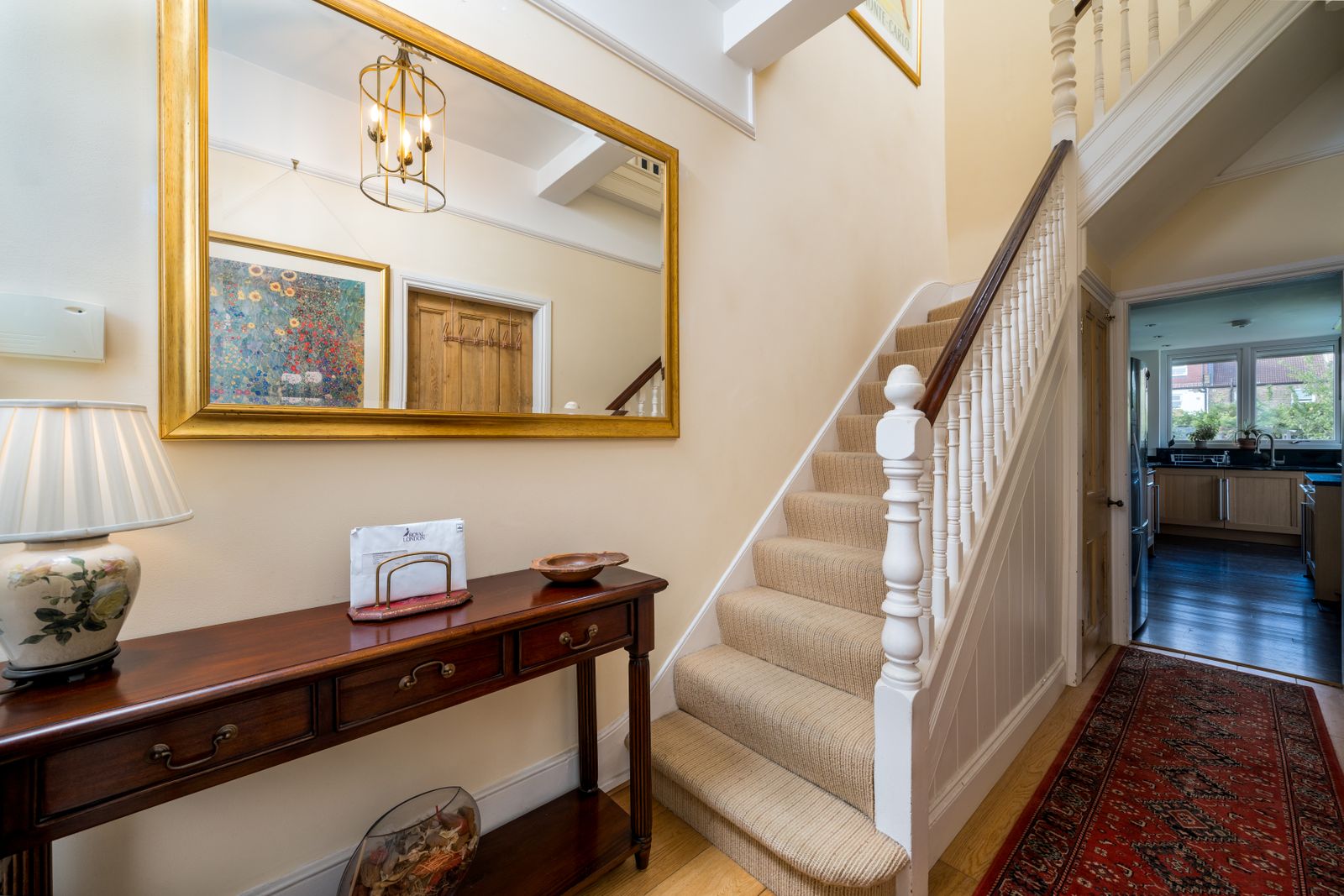
Quick answer: A cash home buyer or iBuyer in NH trades money for speed. iBuyers typically charge a 5% service fee plus repair credits and closing costs, and can close in as few as 21 days. Investors offer less still. Listing with an agent usually nets more, but takes longer. Run both numbers before you decide.
If you are weighing a cash home buyer or iBuyer in NH, you have probably seen the postcards, the "we buy houses" texts, and the online instant offers. They all promise the same thing: no showings, no repairs, a closing date you pick. Some of that is real. What the ads leave out is the price of the convenience. This guide compares the three paths side by side with sourced figures and a worked example, so you can see what you would actually walk away with. It comes from The Phinney Team, who sell homes across southern New Hampshire and run these comparisons for sellers every week.
What is the difference between an iBuyer and a cash investor?
An iBuyer is a company that uses an automated valuation model to make an instant offer, then buys, repairs and resells the home. Opendoor is the best-known example, and Zillow shut its own iBuying program in 2021. A cash investor, the "we buy houses" kind, is usually a local or regional buyer who values your home from the resale price down: after-repair value minus renovation costs minus their profit.
The two behave differently. An iBuyer wants a house that is easy to resell, so it favors move-in-ready single-family homes and prices them close to market, then takes a fee. An investor wants a discount, so the worse the condition, the more the offer drops. Neither is a charity, and neither is a scam when the contract is clear. They are buyers pricing in their own risk and margin.
How much does an iBuyer really cost a New Hampshire seller?
HomeLight's July 2026 analysis puts Opendoor's service fee at typically 5% of the sale price, deducted from your proceeds. Opendoor's own explainer says the fee varies by market and property, shows a 5% example, and lists repair credits of $500 to $2,000 for minor work, $2,000 to $8,000 for moderate, and $8,000 to $20,000 or more for major. Closing costs typically run 1% to 3%. Opendoor's sample on a $350,000 sale totals about $29,500 in costs, roughly 8.4%.
The offer itself arrives within 24 to 48 hours, and you can usually close in as few as 21 days or up to 60. Opendoor's help page describes buying single-family homes across the lower 48 states, so a New Hampshire address may qualify. Eligibility depends on your property, so enter your address on their site to confirm. Fees and terms change, so treat every number here as a starting point and get the offer in writing.
What does each path net on a $570,000 home?
Here is our own arithmetic on a home worth the New Hampshire single-family median of $569,900 (NHAR, September 2026), rounded to $570,000. The iBuyer column uses Opendoor's published sample assumptions: a 5% fee, $5,000 in repair credits and about 2% closing costs. The listing column assumes a 5% total commission, which is negotiable, plus 0.75% seller transfer tax, 0.5% other closing costs and $3,000 of prep. The investor column applies the common 70% rule of thumb to a home that needs $60,000 of work. These are illustrations, not quotes.
| Path | How the number is built | Approx. net to you | Typical timeline |
|---|---|---|---|
| List with an agent | $570,000 less $28,500 commission, $4,275 transfer tax, $2,850 closing costs, $3,000 prep | About $531,375 (6.8% in costs) | Opendoor puts a traditional sale at 60 to 90+ days |
| iBuyer offer | $570,000 less $28,500 fee, $5,000 repair credits, $11,400 closing (2%) | About $525,100 (7.9% in costs) | As few as 21 days |
| Cash investor | ($570,000 x 70%) less $60,000 repairs, as a rule of thumb for a distressed home | About $339,000 before closing costs | Varies by buyer; often faster than a listing |
The gap between listing and an iBuyer on a clean home is real but not enormous, roughly $6,000 in this example before you count the extra weeks of mortgage, taxes and utilities that a traditional sale carries. The investor row looks dramatic because it assumes a home in rough shape. For that kind of house, the fair comparison is selling as-is on the market, which our guide to selling a house as-is in New Hampshire covers. The transfer tax applies in every scenario, as our transfer tax explainer shows.
Are cash buyers still common in 2026?
Yes, but less than a year ago. Realtor.com data reported by Mortgage Professional put the all-cash share of US home sales at 31.4% from January through April 2026, down from 32.3% a year earlier. Cash sales include many ordinary buyers paying cash, not only iBuyers, and a cash offer from a regular buyer can come with a full market price. Our post on whether cash offers beat financed offers in New Hampshire covers that side.
When does selling to a cash buyer make sense?
Speed and certainty can be worth money in a few situations: an inherited house you cannot maintain, a relocation with a hard start date, a home with serious deferred repairs, or a sale where showings are not workable. The market context matters too. NHAR's September 2026 report shows 3,164 homes for sale, up 19.3% from a year ago, 2.9 months of supply and a median 32 days on market, up 18.5%. Buyers have more choice and homes are sitting longer, which is exactly when a guaranteed close looks attractive.
If your home is in good shape and you can wait 60 to 90 days, listing usually wins on price. The market also gives you something an instant offer cannot: competing buyers. Before you decide, see what the full cost to sell a house in New Hampshire looks like and how to price it correctly.
How do you compare offers without getting burned?
Ask every buyer for a written net, not a headline price. Confirm the service fee, repair-credit process, deposit, closing timeline, and what happens if the final offer drops after inspection. A preliminary iBuyer offer is not final until the assessment. Be careful with any buyer who pushes you to sign today, asks for a large non-refundable deposit, or wants to assign your contract to someone you have not met. Have an attorney read any contract before you sign it.
The simplest check is a side-by-side net sheet. The Phinney Team will build one for your address showing what you would keep from a listing, an iBuyer offer and a cash investor, with no obligation. Start on our NH home selling page or read the sellers playbook first, then ask us for a free valuation and net comparison.
Related reading
See what a seller net sheet is, with a New Hampshire example, selling a house as-is in New Hampshire, and whether to sell before you buy in NH.
Frequently asked questions
Is it a good idea to sell to a cash home buyer or iBuyer in NH?
It can be, if speed matters more than price. Expect to net less than a well-prepared listing, often by several thousand dollars on a clean home and far more on a distressed one. Compare a written net from each path before choosing.
How much do iBuyers charge in New Hampshire?
Opendoor's service fee is typically 5% of the sale price, plus repair credits and closing costs of roughly 1% to 3%. Its own sample totals about 8.4%. Fees vary by market and property, so confirm the exact figures in your written offer.
Do "we buy houses" companies pay full market value?
Rarely. Investors usually price from after-repair value, often using a 70% rule of thumb minus repair costs, so offers land well below market. They can make sense for a house in poor condition, not for a move-in-ready home.
How fast can you close with a cash buyer?
iBuyers advertise closings in as few as 21 days and up to 60, and investors often move faster still. Opendoor puts a traditional sale at 60 to 90 days or more from prep to closing.
Do I still pay transfer tax if I sell for cash?
Yes. New Hampshire's real estate transfer tax applies to the sale however the buyer pays. The seller's share is 0.75% of the price, so a $570,000 sale carries about $4,275 in seller transfer tax in every scenario.