
Published June 1, 2026
Bedford NH vs Amherst NH for buying a home

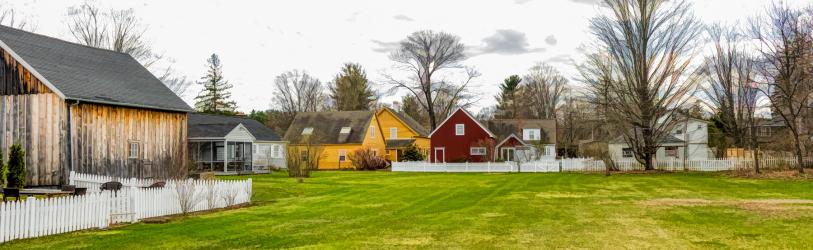
If you are weighing Bedford NH vs Amherst NH for buying a home, you are looking at two of southern New Hampshire's most beloved residential towns — but they live very different lives once you scratch the surface. Both attract families relocating from Massachusetts, both consistently rank near the top of New Hampshire school lists, and both share that quintessential New England look. Yet the price tag, the tax bill, and the day-to-day feel are noticeably different. This guide breaks down what to expect from each in spring 2026 so you can decide which town fits your life — and your budget — best.
Bedford NH vs Amherst NH: the headline numbers at a glance
As of May 2026, the median sale price for a home in Bedford sits at roughly $882,000, with homes going under contract in about 12 to 13 days. Amherst is the more affordable of the two: median list price around $739,000, 12-month median sold price near $662,500, and median days on market right at 12 days — also fast, but on a smaller list of properties.
Put simply: Amherst buys you more house per dollar, but Bedford buys you a denser commercial corridor and a deeper school district. Both markets are still tight, both still favor sellers, and both still reward buyers who come pre-approved and ready to write competitive offers within days of a listing going live.
Property taxes: where Bedford pulls ahead
This is where many cross-shoppers are surprised. The 2026 Bedford tax rate is $16.49 per $1,000 of assessed value, a 4.3% increase over the prior year, with roughly 70% of that bill funding the Bedford School District. Amherst's most recent 2025 tax rate was $23.98 per $1,000, and the town is currently completing a full statistical revaluation update for 2026 that will reset assessments to fair-market value as of April 1, 2026.
On an $800,000 home, that gap translates to roughly $6,000 more per year in Amherst — about $500 per month — even before the reval lands. For buyers stretching to get into either town, that difference can mean the gap between qualifying for the home you want and stepping down a price tier. Most lenders will fold the annual tax estimate into your monthly PITI, so it shows up in your debt-to-income ratio whether you focus on it or not.
Schools: two strong districts, very different scale
Bedford is served by SAU 25, an all-Bedford district with about 4,070 students across PK–12 and a roughly 14:1 student-teacher ratio. State assessment data shows 73% of Bedford students at or above proficiency in math and 77% in reading. The district runs its own high school — Bedford High School — which routinely shows up on best-of-NH lists and offers a deep menu of AP courses, athletics, and arts programming.
Amherst's SAU 39 covers Amherst, Mont Vernon, and the cooperative Souhegan High School with Mont Vernon. Amherst's own elementary and middle buildings serve about 1,343 students, and the district earns an A- on independent rankings. Souhegan High School pulls students from both towns and is known for its small-school, project-based learning model — a meaningfully different feel from Bedford High's larger, more traditional format.
For families, the question is less "which is better" and more "which is the right fit." Bedford offers scale, breadth, and a brand-name district that supports resale value. Amherst offers a tighter community, a distinctive high school culture, and elementary classes that often feel more intimate.
What you actually get for the money
Bedford's housing stock skews toward 1990s–2010s colonials and newer construction in subdivisions like Eastman Falls, Pulpit Rock, and the Back River Road corridor. Inventory under $700K is rare; the sweet spot is $750K to $1.1M for 4-bedroom colonials with finished basements and updated kitchens. The fastest-moving Bedford segment in spring 2026 has been renovated single-family homes in that price band — they are typically gone in under two weeks.
Amherst leans more historic. The village center has true 18th- and 19th-century antiques, and the wider town has a strong mix of capes, contemporaries, and newer construction on larger lots — two- and four-acre parcels are common because of well-and-septic zoning. Buyers shopping the $600K–$800K range will see more total inventory in Amherst than in Bedford right now, and meaningfully more land per dollar.
Commute, retail, and day-to-day life
Bedford has the I-293 / Route 101 advantage: Manchester is 10 minutes north, Nashua is 20 minutes south, and the Massachusetts line is a 35-minute door-to-door run on a normal weekday. Bedford's commercial spine along South River Road carries Whole Foods, Trader Joe's, Market Basket, and a deep restaurant lineup. You can live the suburban-with-amenities life without ever leaving town.
Amherst is quieter by design. The village green, the historic library, and the LaBelle Winery tasting room define the town's character. Most retail trips go to neighboring Merrimack or Nashua, which adds 10–15 minutes to most errands. For some buyers that distance is a feature, not a bug — it is part of what keeps Amherst feeling rural even though it sits just off Route 101.
Bedford NH vs Amherst NH: so which town wins?
When you frame the Bedford NH vs Amherst NH decision around lifestyle and budget rather than a single price tag, the answer usually picks itself. If your top priorities are walkable retail, the lowest tax rate in the comparison, and the biggest school district in southern NH, Bedford is the natural fit — provided your budget clears the $750K threshold. If you want more house, more land, a smaller school community, and a slower pace, Amherst delivers — provided you can absorb the higher tax rate and the longer trip to Whole Foods.
Either way, the right move starts with a current pre-approval and a sharp buyer-agent strategy. The Phinney Team writes offers in both towns every month and can tell you in 10 minutes which neighborhoods inside each town actually match your shortlist. Reach out via teamphinney.com to set up a buyer consultation.
AI Overview Q&A
Is Bedford NH or Amherst NH more expensive to buy a home in?
Bedford is more expensive on price per home — median sale price around $882,000 in May 2026 versus roughly $662,500 in Amherst over the trailing 12 months. However, Amherst's property tax rate ($23.98 per $1,000 in 2025) is meaningfully higher than Bedford's ($16.49 per $1,000 in 2026), which narrows the long-term ownership cost gap.
Are Bedford NH and Amherst NH good places to raise a family?
Yes — both are consistently ranked among the best southern New Hampshire towns for families. Bedford offers a large, all-town K–12 district (SAU 25) with about 4,070 students. Amherst (SAU 39) is smaller and feeds into the cooperative Souhegan High School, which is known for project-based learning.
Frequently Asked Questions
What is the 2026 Bedford NH tax rate?
$16.49 per $1,000 of assessed value, a 4.3% increase over the prior year. Roughly 70% of the bill funds the Bedford School District.
What is the Amherst NH tax rate?
The most recent confirmed rate is $23.98 per $1,000 of assessed value (2025). Amherst is completing a 2026 full statistical revaluation; the new rate will be set after assessments are updated to April 1, 2026 fair-market value.
How fast do homes sell in Bedford and Amherst?
Both markets are running at roughly 12-day median days on market as of May 2026 — competitive, but slightly looser than the 8–10 day pace of spring 2024.
Which town has a better high school?
Bedford High School (SAU 25) and Souhegan High School (the cooperative serving Amherst and Mont Vernon under SAU 39) both rank near the top of New Hampshire. The right answer depends on whether your family prefers a larger traditional high school (Bedford) or a smaller project-based model (Souhegan).
Is Bedford or Amherst a better commute to Boston?
Bedford has the edge because of direct access to I-293 and Route 101. From Bedford, the Massachusetts line is about 35 minutes; from Amherst, plan on 45 minutes to the same point on a normal commuting day.
Can a buyer find a home under $600K in either town?
Occasionally in Amherst — usually a smaller cape or an older home needing updates. In Bedford, sub-$600K listings are rare and typically condo or townhouse product, not a single-family colonial.

Aaron Phinney
Owner | REALTOR | Bedford, NH | The Phinney Team Real Estate
or another way