
Published August 17, 2026
Best Neighborhoods in Hollis NH (2026 Guide)

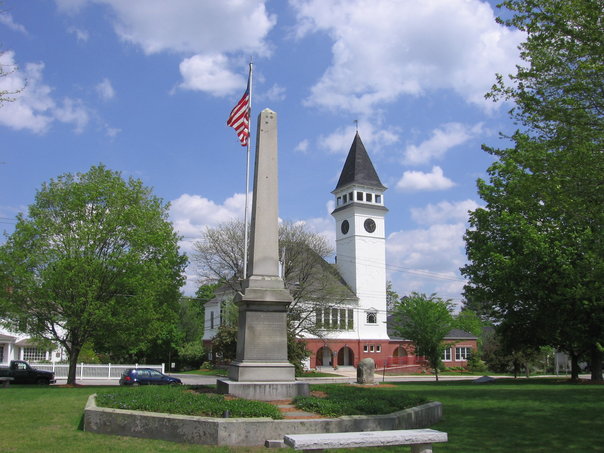
Quick answer: The best neighborhoods in Hollis NH depend on what you want most. The Hollis Historic District around Monument Square offers walkable village life, Depot and Dow Road areas give you protected open fields and orchard views, and the wooded south end near Brookline delivers the most land per dollar.
Quick take:
- Village walkability: Hollis Historic District and Monument Square — sidewalks, Town Hall, classic New England architecture.
- Farmland and views: Depot Road and Dow Road, where conservation easements permanently protect the open fields.
- Most acreage: the southern and western reaches toward Brookline, with wooded lots and unpaved historic roads.
- What it costs: Hollis runs well above the statewide median — expect roughly $700,000 to $900,000 depending on the pocket.
Hollis is the town buyers describe to us before they know its name: quiet roads, working orchards, strong schools, and a real village center rather than a strip of retail. Roughly half the town's land is still in agricultural use, and that is not an accident — decades of restrictive zoning and conservation partnerships protected it deliberately. If you are weighing where to land in southern New Hampshire this summer, here is an honest look at the best neighborhoods in Hollis NH and who each one actually suits.
What makes Hollis different from its neighbors?
Scale and land use. Where Nashua and Merrimack grew outward with subdivisions and commercial corridors, Hollis pushed the other direction. The landscape opens from tightly settled pockets into planting fields, then climbs through gently rolling hills into the Hollis Historic District, where the town center appears with sidewalks, orchards, Monument Square, and Town Hall. Brookdale Fruit Farm on Broad Street anchors a genuine farm economy — more than 50 apple varieties, plus peaches, cherries, and berries — alongside Lull Farm and Lavoie's Farm. That agricultural base is the reason Hollis feels rural despite sitting twenty minutes from Nashua and inside easy reach of the Massachusetts line.
Statewide context matters for expectations: New Hampshire's median single-family price was about $575,000 in June 2026 (New Hampshire REALTORS), and the 30-year fixed sat near 6.67% in mid-August (Freddie Mac). Hollis trades at a clear premium to that median, with typical values in the $700,000s and listings frequently asking $850,000 and up.
The Hollis Historic District and Monument Square
This is the closest Hollis comes to walkable. Homes here are older — Colonials, Capes, and Federals, many carefully restored — set on modest lots with sidewalks connecting Town Hall, the library, and the common. You trade acreage for the ability to walk to a town event, and you accept the realities of an older housing stock: smaller closets, occasional plaster, and systems that may be newer than the frame around them. Buyers who love this pocket tend to love it specifically; it is not a compromise choice.
Depot Road, Dow Road, and the protected fields
If the picture in your head is a farmhouse with a long view across open field, this is the area to focus on. Open land along Depot and Dow roads was protected through conservation efforts, which means the view you buy is the view you keep — a meaningful distinction from towns where today's hayfield is next year's cul-de-sac. Lots run larger, homes range from restored antiques to custom builds from the last two decades, and pricing reflects both the land and the permanence of the setting.
The south and west: land, woods, and unpaved roads
Toward Brookline and along the western edge, Hollis gets wooded and quiet. Unpaved historic roads are still in active use, lots of two acres and up are common, and this is generally where your dollar buys the most ground. The tradeoffs are practical rather than aesthetic: longer drives to the village and to schools, well and septic on nearly every property, and winter maintenance that is a real consideration on dirt roads. For buyers who want privacy and space over walkability, it is the strongest value in town.
How are the schools?
Hollis is served by SAU-41, with Hollis Primary and Hollis Upper Elementary in town, then Hollis Brookline Middle School and Hollis Brookline High School shared with neighboring Brookline. The high school enrolls roughly 750 students on a rural campus — small enough that families cite it as a reason for choosing Hollis over larger districts nearby. Because the middle and high schools are cooperative with Brookline, buyers comparing the two towns are often comparing the same upper grades.
Is Hollis a good place to buy this summer?
The timing is better than it has been in several years. Inventory across southern New Hampshire has loosened compared with last summer, and while the state is still tight at roughly 1.4 months of supply, homes in the upper price brackets — which is most of Hollis — tend to sit longer than the statewide average. That gives buyers room to inspect properly, negotiate on findings, and avoid the escalation spirals of prior summers. In a town where most homes are on well and septic, that extra diligence time is worth real money. If you are early in the process, our home buying guide walks through the sequence, and you can browse current inventory and town details on our Hollis NH real estate page.
Related reading
- Weighing the town itself, not just the streets? Read is Hollis NH a good place to live.
- Comparing Hollis against the town next door? See our Hollis and Milford homes for sale guide.
- Also considering Milford specifically? Compare the best neighborhoods in Milford NH.
Frequently asked questions
Which are the best neighborhoods in Hollis NH for families?
Families often start near the Hollis Historic District for proximity to the primary and upper elementary schools, then widen to Depot and Dow roads for more land. Because the middle and high schools are cooperative with Brookline, bus routes rather than walkability usually decide the practical answer.
How much does a home in Hollis NH cost in 2026?
Typical Hollis values run in the $700,000s, with active listings frequently asking $850,000 to over $1 million depending on acreage and condition. That is a significant premium over New Hampshire's roughly $575,000 statewide median single-family price as of June 2026.
Does Hollis have public water and sewer?
Mostly no. The large majority of Hollis homes rely on private wells and septic systems, which is typical for a town that protected its rural land use. Budget for water testing and a septic inspection on every purchase, and ask for records of past service.
What is the commute from Hollis to Nashua or Boston?
Nashua is generally fifteen to twenty-five minutes depending on which end of Hollis you start from. Boston commuters typically reach Route 3 or I-495 and plan on roughly an hour and fifteen minutes each way, longer in peak traffic — a real factor worth testing before you buy.
Can you still buy land or build in Hollis?
Buildable lots exist but are limited, and Hollis zoning is deliberately restrictive to protect open space and agricultural land. Expect larger minimum lot sizes than in neighboring towns and a longer approval path. Anyone considering new construction should confirm requirements with the town before making an offer.
Hollis rewards buyers who know what they want from a town. If you are deciding between village walkability, protected farmland views, and acreage on a dirt road, The Phinney Team at Keller Williams in Bedford can walk the specific pockets with you and tell you honestly which homes will hold value. Reach out and we will map it against your commute, your budget, and your timeline.